oral texts · digitisation · standardisation
One script for many voices
The Akha oral tradition is vast, but every researcher wrote it down differently. This project brings those spellings into one script — and the texts into English and Chinese.
- 5researcher archives
- 1common orthography (CAO)
- 3source languages → English
- 1950sdocumentation begins
Background
Who the Akha are
The Akha are a Tibeto-Burman-speaking people of the highlands running through Yunnan, Laos, Thailand, Myanmar and Vietnam. Their communities carry an oral tradition of ritual texts — chants, genealogies and invocations — that for most of their history existed only in performance, and in the notebooks of the researchers who came to record them.
Why one script matters
Because each researcher wrote Akha down differently, the same passage can look like several different languages. A word recorded in one archive cannot be searched against another, and a chant transcribed in the 1970s cannot be lined up with a recording made fifty years later. Bringing the transcriptions into a single orthography is what makes the corpus comparable — and, in the end, translatable.
What the work involves
Handwritten pages are converted into typed text with optical character recognition, a task the project divides between a language model and human correction. Older spellings are then converted into the Common Akha Orthography, and texts that survive only in Chinese, German or Thai are translated into English. Each stage depends on the one before it, which is why the project treats them as one chain rather than as separate jobs.
Where it goes next
The next step is speech: recorded oral texts and chants turned into typed CAO, which means teaching a system to hear a ritual register rather than ordinary conversation. New fieldwork in Phongsaly, Laos, will add material that has never been written down at all.
The problem
The Akha live across the highlands of Yunnan, Laos, Thailand, Myanmar and Vietnam. Their ritual texts have been documented since the 1950s, but researchers in different periods and places used varied, idiosyncratic writing systems — which makes comparison between them hard, and leaves much of the corpus untranslated.
The work
- Digitise handwritten source material with OCR.
- Transcribe older scripts into the Common Akha Orthography (CAO) with AI-assisted conversion.
- Translate the typed texts from Chinese, German and Thai into English with digital translation tools.
The chain
Every stage hands its output to the next.
- Handwritten page
- OCR · LLM + manual
- Typed text
- CAO conversion
- English / Chinese
The archives
Five collections form the corpus.
- Inga-Lill Hansson
- Jacob Terrell
- Friedhelm Scholz
- Giulio Ongaro
- Yuan Mingze
What's next
- Speech-to-text for recorded oral texts and chants.
- Recorded chants converted into typed CAO.
- New translation tools: CAO into English and Chinese.
- New fieldwork and research in Phongsaly, Laos.
Five hands, five spellings of the same tradition — all converted into one orthography.
From the project

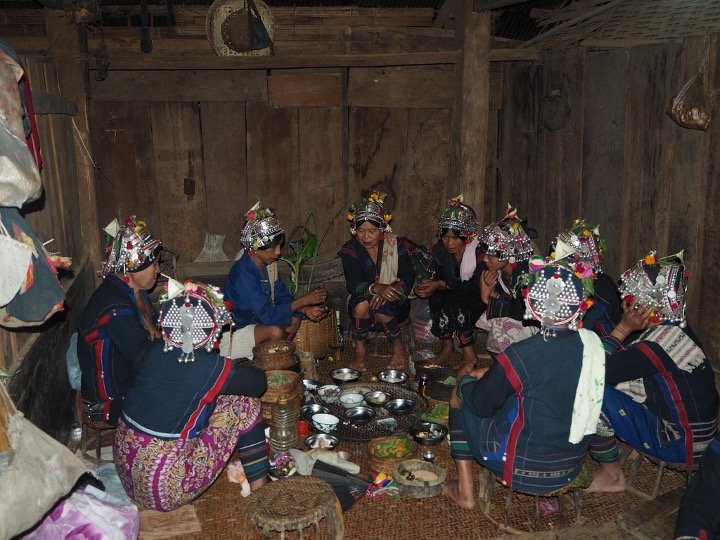
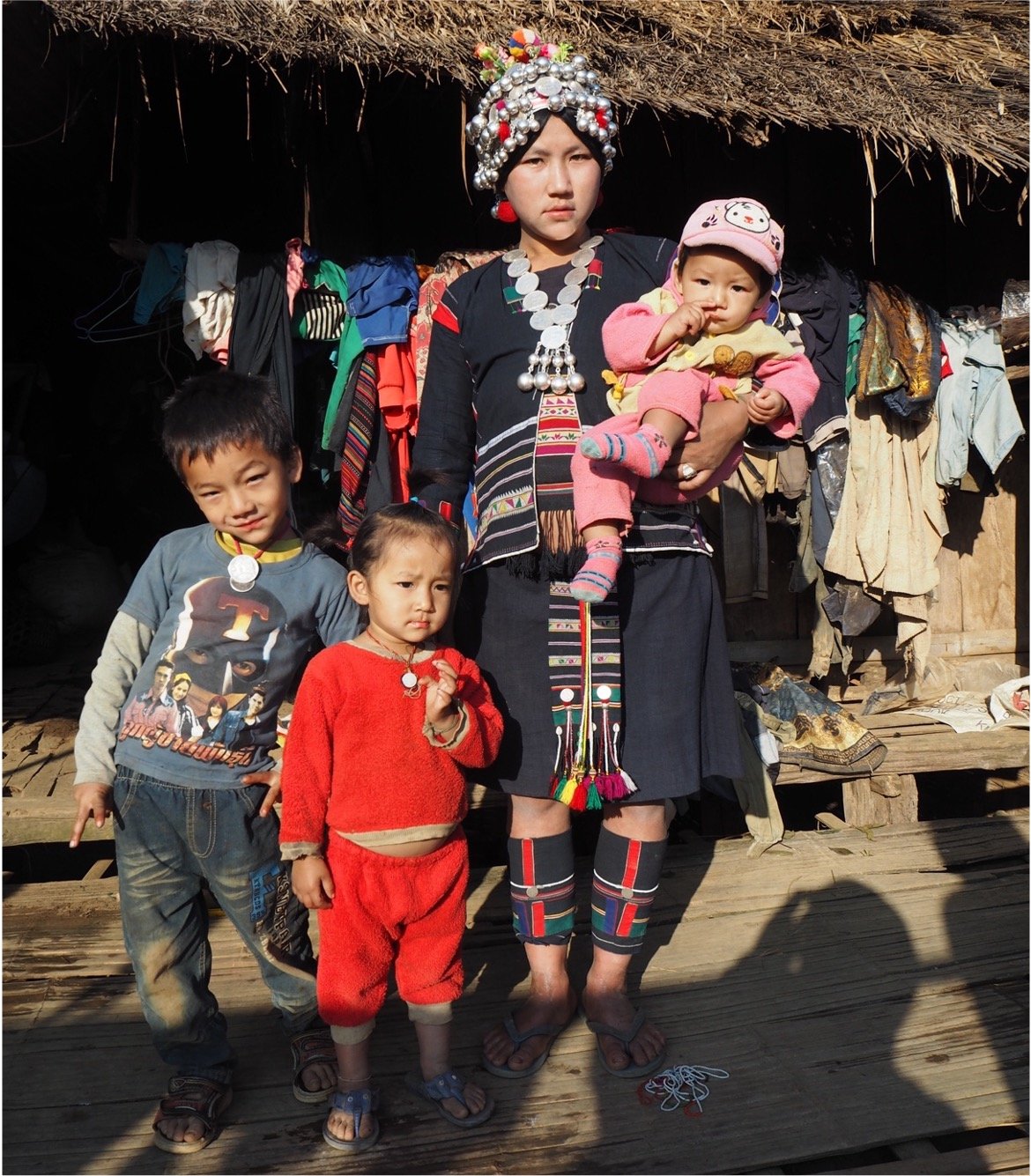
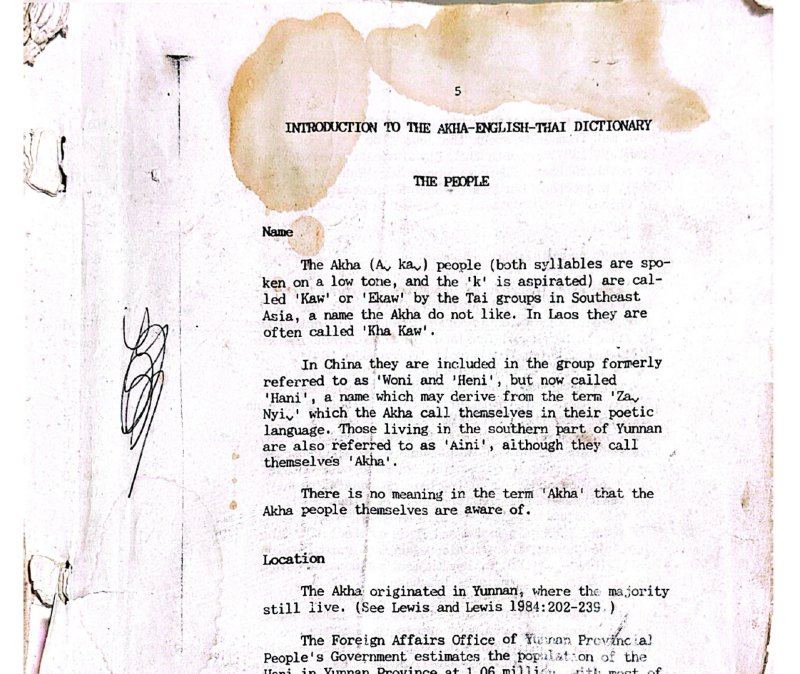
From the project: manuscript pages and the Akha highlands.
The team
Principal Investigator
- Prof. Giulio ONGARO — Division of Humanities
Student interns
- Ashab RIBAT — Engineering
- David ABRAHAM — Engineering
- Mariia ROGOZINA — Lingnan University, Contemporary English Studies
Project support
- Dr. Steve MA — Division of Humanities
- Yifan WANG — Library
Archives & sources
- The Hansson, Terrell, Scholz, Ongaro and Yuan Mingze archives of Akha oral texts.
- Paul Lewis. Akha–English–Thai Dictionary, 1989 — scanned, OCR’d and converted to CAO.
- Photography of the Akha: Prof. Giulio Ongaro.